
If you’ve been following along, you already know the foundation: pick a niche that matters to you, build a simple brand around it, and create content that genuinely helps people.
Monetization isn’t a separate phase you eventually graduate to. It’s what naturally happens when the first three parts are done right.
I’ll be honest, when I started out I had it completely backwards. I thought monetization was the goal, and everything else was just the path to get there. It took me longer than I’d like to admit to figure out that when you actually focus on helping people, income starts to take care of itself.
You Don’t Have to Sell to Earn
Most people who are new to this feel a kind of invisible pressure around making money online. Like they need to be convincing, pushy, or constantly promoting something. That pressure is exactly what gets in the way.
The way monetization actually works is a lot simpler than most people realize:
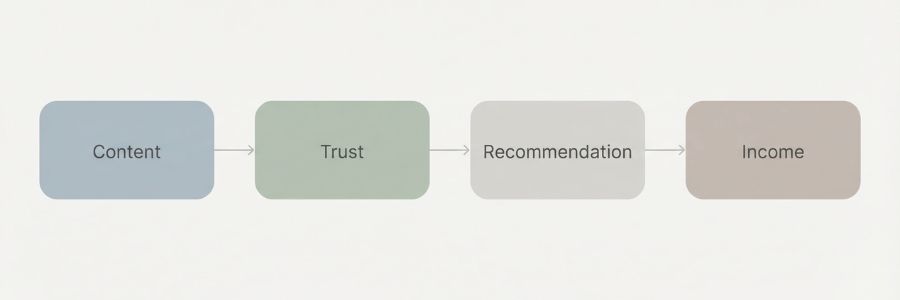
That’s really it. When your content answers a real question someone has, and you recommend something that actually solves their problem, it no longer feels like a sales pitch. It feels like a favor.
“Your job isn’t to convince anyone. It’s to help the right person find the right solution.”
The goal of this page is to take the pressure off selling and replace it with a clearer picture of how honest income actually gets built.
Affiliate Marketing: The Beginner’s Best Option
There are a lot of ways to make money online. Affiliate marketing is the one I recommend starting with, and it’s not close.
Here’s the basic idea: you create content that helps people, and when a product or tool genuinely supports what you’re teaching, you include an affiliate link. If someone clicks it and decides it’s right for them, you earn a commission. No product to build. No customer service. No inventory.
What makes it ideal for beginners is that it removes the biggest barriers that stop most people before they even start:

No product creation required. You’re recommending things that already exist and already work.
Low overhead. You’ve got room to grow at your own pace without a lot of financial pressure.
Skills that transfer. Learning to create content, understand your audience, and build trust aren’t just affiliate marketing skills. They’re business skills that’ll serve you no matter what direction you grow.
Long-term earning potential. Every piece of content you publish can keep working for you long after you’ve moved on to the next one.
Content always comes first. The affiliate link is just there to support what you’ve already explained. When people start loading their content with links before they’ve actually helped anyone, the quality drops fast and so does the trust they’re trying to build.
Only Promote What You’d Actually Use
Trust of course is the real asset here, and it takes a long time to build and not very long to lose. That’s why I only recommend tools and platforms I’ve personally used and found genuinely valuable.
The first platform that made online income feel realistic for me was Wealthy Affiliate. I’ve been using it for over 7 years and it’s not something I promote because it pays well. It’s something I promote because it works, and that difference comes through in how I talk about it.
When you’re writing from real experience, a few things happen naturally:
Your content has specific detail that generic reviews don’t have.
Your tone is honest instead of promotional.
Readers can tell the difference, even if they can’t explain why.
“Quick commissions are tempting. But trust compounds. And when people trust you, they come back.”
Recurring income from affiliate marketing isn’t built through hype or clever copywriting. It’s built by showing up consistently, helping people, and recommending things you’d stand behind regardless of commission.

Disclose Your Affiliate Relationships
This one’s straightforward and worth covering early because a lot of new affiliate marketers either don’t know about it or put it off too long.
The good news is that a simple, transparent disclosure actually fits perfectly with the approach we’re talking about. You’re not hiding anything. You’re recommending things you believe in and being upfront about how the model works. Most readers respect that.
This applies anywhere you’re making a recommendation. Blog posts and pages, social media, YouTube videos, you name it. If there’s an affiliate link involved, a quick disclosure needs to be there too.
A one or two sentence disclosure at the top of your content is all it takes. Something like: “This post contains affiliate links. If you purchase through one of them, I may earn a small commission at no extra cost to you.”
Keep It Simple. Start With One.
Don’t try to build a monetization strategy all at once. The best first step is the smallest one that actually moves things forward.
Think of one product or tool you already use and genuinely like.
Create one piece of content around it… a how-to, a review, a comparison, whatever fits naturally.
Focus on being clear and helpful, not persuasive.
Add your disclosure, include the affiliate link where it makes sense, and publish it.
Keep Building
How to Create Content That Actually Builds Trust
The right approach to content creation before you ever think about monetization.
TrafficDriving Traffic to Your Site Without Paid Ads
The organic strategies that work long-term and compound over time.
FoundationOnline Business Foundations: Where Every Laptop Lifestyle Starts
If you haven’t read this yet, this is the place to start.